"discovering" restraint
As the year spins ‘round, lists of recent happenings and discoveries—personal and global—proliferate, while each new year rises in front of us with its own uncertainties, its many unknowns. Humans probably have experienced, over time, an evolutionary advantage through our attraction to what seems new, even as those among us who hang tight with what we know also provide useful grounding. Looking over positive news from the past 12 months, a Mongabay article about newly described biodiversity immediately attracted my attention, so here are some teasers that might turn your head as well.

Walking for 5-6 hours a night through the cloud forests at nearly 3000 meters in the Cordillera de Huancabamba of northern Peru, a team led by Germán Chávez identified 3 species of diminutive frogs previously not known to western science. The pointy-snouted Pristimantis yonke, pictured here, is named after ‘yonque’, a sugarcane spirit who helps locals survive the cold extremes of these highlands. The smallest of the three newly named species, this one lives within the leaves of bromeliads where tiny pools of water condense out of the mists. The study area was wisely chosen just north of a low Andean pass that allows dispersal to/from the Amazon region and to/from the Pacific lowlands. The pass also disrupts dispersal north-south along the ridge of the cordillera, creating conditions for Pristimantis to become the most diverse group of amphibians in Central and South America.

Another newly-identified species, this time 16-20 feet long (how have we missed that?) and from the big waters of the Atlantic, Mobula yarae is named after an Indigenous Brazilian water spirit, Yara. Intriguingly, one of the researchers on the project that confirmed M. yarae as only the 3rd species of manta ray in the world was a PhD student from Sao Paulo named Nayara Bucair, collaborating with Dr. Andrea Marshall at the Marine Megafauna Foundation. For those less familiar with ocean life, a fictional account that also features giant mantas can be experienced in Richard Powers’ 2024 novel Playground.
On the edge of a picnic area in a protected Malaysian forest, naturalist Gim Siew Tan photographed a unique flower she didn't recognize, and research botanist Siti Munirah pulled together a team that later gave it the Latin binomial Thismia selangorensis, a new addition to the largely tropical genus all known as fairy lanterns. These plants have no chlorophyll of their own, but live in close association with fungal partners who share sugars from other, greener, plant partners. The fungi offer soil nutrients and water as well. Tan had been looking for slime molds, but she likes to think that this new plant "found me."
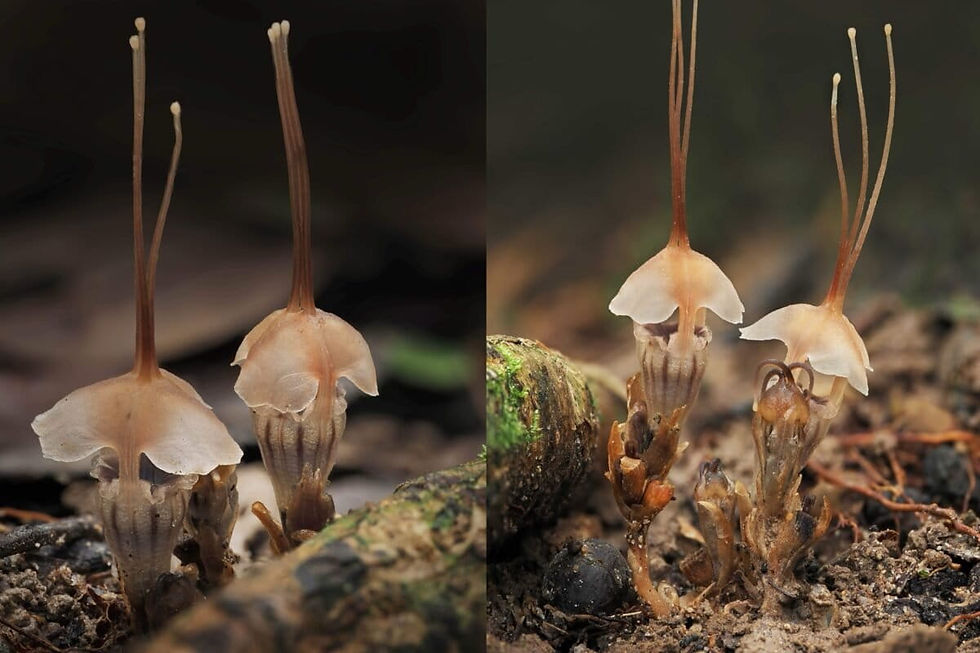
As humans continue to spread across the world's remaining habitats, many of the species we haven't even identified yet could disappear faster than we find them. But as more people recognize the inherent value of all life and the importance of fully functional ecosystems, maybe our instinctive excitement about "newness" can push us to (re)discover restraint. We know so many ways to lower our impacts, and one unknown ahead is how many more of us might choose to prioritize these pathways to protect Life as a whole.


Comments